




Justice Department’s Surprising Sentence Proposal for Breonna Taylor’s Case ⚖️🤔
In an unexpected twist in the high-profile case of Breonna Taylor, the Justice Department recently requested a federal judge to sentence the convicted officer responsible for her 2020 death to just one day in jail. While this request might appear to be a glaring nod toward leniency, it carries with it something far bleaker—a deeper societal commentary on our legal system’s approach to accountability and justice. ⚖️😔
On March 13, 2020, Taylor, a 26-year-old Black woman, was shot multiple times by Louisville Metro Police officers executing a no-knock warrant in a drug investigation gone awry. Her death ignited a firestorm of protests and reignited conversations around racial injustice and police violence in America. Yet here we find ourselves, as the Justice Department seemingly requests a mere slap on the wrist for an individual who wielded the badge against a civilian’s right to life.
A Duality of Disappointment
The proposal merits deeper scrutiny, not just for its legal ramifications, but also for its profound psychological impact on communities seeking justice. Here lies the striking antithesis: on one hand, the conviction of a police officer for merely doing his job, or so the narrative suggests; on the other hand, the public’s urgent demand for accountability in the face of systemic racism. Can society fathom a sentence that, like a fragile soap bubble, promises reform but bursts at the first contact with reality? 💔
This duality raises painful questions: What does it mean to serve justice in a system stacked against the marginalized? How can one reconcile the concept of punishment, inherently linked to accountability, with an administration’s decision that seems to float above the consequences it’s designed to administer? It evokes feelings of futility and, dare we say, apathy, reminiscent of watching a slowly deflating balloon that once held vibrant hope. 🎈
The Irony of “Justice”
Furthermore, the irony of the Justice Department—the very entity responsible for enforcing the law—requesting such a lenient sentence for a police officer is striking. One can only liken it to a parent who condones misconduct in one child while meting out harsh punishment to another. It preserves the status quo of police immunity while further alienating a community desperately seeking redress. Are we to accept this paradox as part of the legal fabric—the warp and weft of justice woven through the threads of indifference? 🧵
Public Outcry and Its Implications
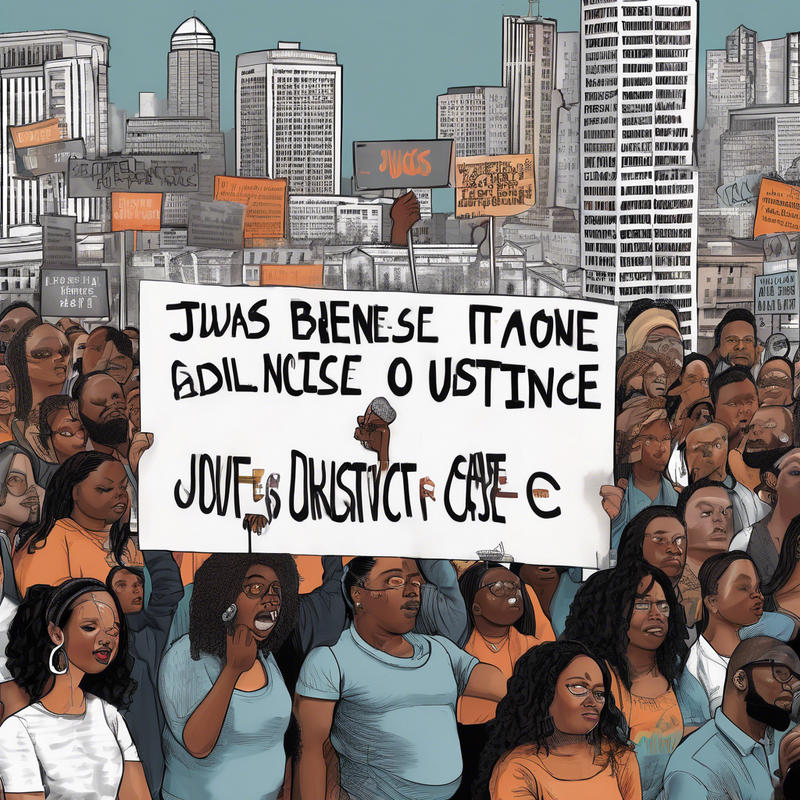
The public’s reaction has been one of outrage, echoing the resounding wave of protests that surged through the nation following Taylor’s death. Activists and ordinary citizens alike have rallied against what they see as a mockery of justice. This demand to hold law enforcement accountable brings forth a heartbreaking truism about our justice system: it operates like a finely tuned machine, proficient at ignoring the creaks and groans of those left behind. 📢
Organizations advocating for racial equity have expressed deep discontent. They argue that such leniency sends a troubling signal to communities of color that their lives are undervalued, that policing—far from being an instrument of protection—is wielded more as a sword than a shield. In this context, the proposed sentence of a single day’s incarceration feels less like justice and more like a cruel joke played on those who have suffered at the hands of systemic oppression.
Charting a Path Forward
So, where do we go from here? The juxtaposition of potential leniency against a backdrop of social unrest invites a distinct necessity for reform. Calls for police accountability must evolve from mere rhetoric into actionable change. Supporters of reform suggest a multi-faceted approach:
- Enhancing Training: Implementing comprehensive training to confront implicit bias and promote de-escalation tactics.
- Independent Oversight: Establishing civilian review boards with real power to investigate police misconduct.
- Legislative Reform: Advocating for laws that prohibit no-knock warrants, thereby eliminating practices that endanger lives.
- Community Engagement: Fostering reparative justice through dialogues that incorporate voices from affected communities.
This confluence of anger, disappointment, and hope generates a pressing imperative for systemic change. Like a phoenix rising from ashes, communities can emerge from moments of despair to demand the accountability that has been so tragically absent. 🕊️
Only by addressing the root causes of systemic racism in policing can true justice be served. The plea for a one-day jail sentence must not mark the end of a painful yet pivotal chapter but rather serve as a catalyst for meaningful recommitment to justice for all. If systems remain unchanged, the very essence of justice—once luminous like a sunlit path—risks fading into an obscured fog of complacency and resignation. 🌫️