


Sprinkles Cupcakes: The Pioneering Bakery That Sold Sweetness from ATMs Shutters Overnight 🧁😮
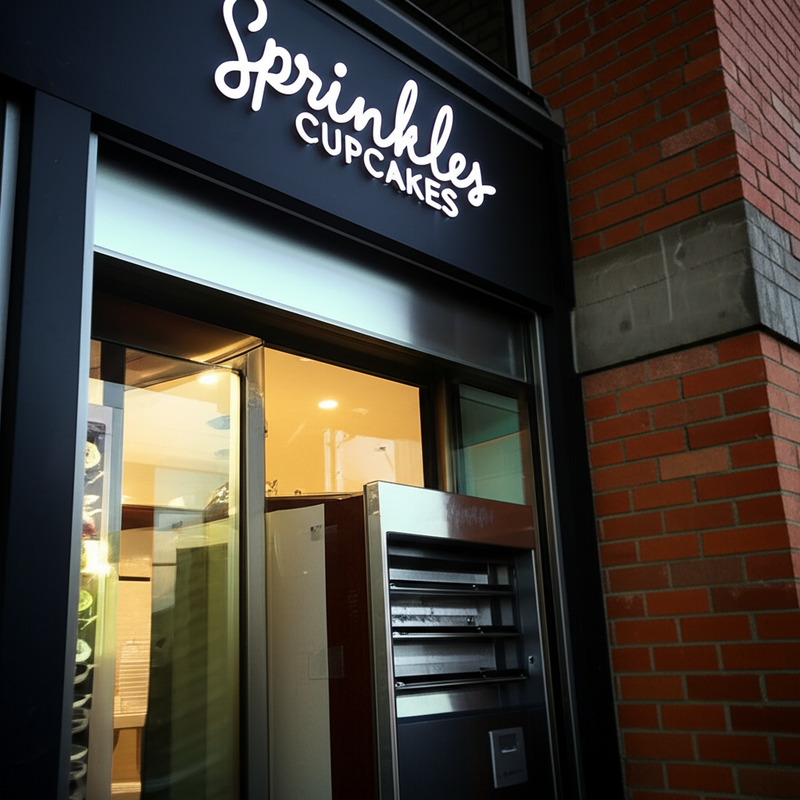
It was a business built on whimsy, convenience, and frosting—quite literally. Sprinkles Cupcakes, once hailed as the darling of dessert innovation, broke traditional bakery molds by introducing the “Cupcake ATM” back in 2012. Imagine, if you will, a gleaming machine humming silently on a city sidewalk, distributing perfectly frosted miniature cakes 24/7, as if vending machines had finally grown a sweet tooth. Yet, in a twist—a sprinkle of bitter irony—the very bakery that mastered vending its wares via automated teller machines has itself suddenly closed its doors, leaving patrons and pastry enthusiasts both puzzled and nostalgic. 🍰🚪
A Delicious Disruption
Sprinkles wasn’t a mere bakery—it was a pioneer in introducing automation to one of the most tactile, sensory-driven industries: baked goods. The cupcake ATM, a sleek contraption resembling an oversized mailbox, promised round-the-clock access to cupcake delicacies without human interaction. It was convenience served on a silver platter, or rather, a chilled shelf at 38°F.
But here lies the striking antithesis. Cupcakes, by their very nature, are symbols of celebration, care, and artisanal touch—qualities seemingly incompatible with mechanized vending. The juxtaposition was as if Shakespeare’s sonnets were suddenly being recited by robots in a dim-lit factory. The sweet charm and intimacy baked into every swirl of buttercream frosting were wrapped in the cold logic of tech. Was Sprinkles serving humanity or a shiny dehumanized dessert token? 🍃🤖
The ATM: From Novelty to Necessity
The Cupcake ATM, introduced first in Beverly Hills before expanding to cities like Chicago and New York, was a stroke of marketing genius and symptom of evolving consumer habits. It met the modern impulse: instant gratification without queues or small talk.
Early buzz about this confectionary gadget was suffused with a curious delight. Reporters flocked, lines formed, and social media celebrated this collision of food and fintech. Yet, beneath the surface was a more profound commentary on the changing nature of retail: food that once required smiling baristas was now being purchased via touchscreens and illuminated mechanical windows.
A friend once mused over coffee and doughnuts: “Isn’t it strange how we’ve traded the warmth of human interaction for the cold efficiency of buttons and screens? Even a cupcake can feel lonely now.”
The Sudden Closure: What Happened?
On an otherwise unremarkable morning, Sprinkles announced the immediate closure of its flagship and several outlets, citing “market challenges” and an undetermined “restructuring phase.” The news fell like a rogue cherry on a sundae—unexpected and a touch sour.
Behind the scenes, analysts point to a variety of forces: the rising costs of premium ingredients, urban real estate pressures, and an evolving consumer palate increasingly drawn to either artisanal experiences or health-focused alternatives. The Cupcake ATM’s futuristic allure, once a shiny beacon, may have dimmed amid these realities.
Moreover, the pandemic’s lingering aftertaste had accelerated online shopping and contactless delivery but also exposed the fragility of novel retail models reliant on foot traffic and impulse buys. The cupcake, once a sweet embrace, had to compete with apps delivering entire gourmet meals.
“A cupcake ATM brilliant in concept but perhaps ahead of its time — or behind the curve of what customers truly crave.”
Ironies Frosted with Reality
Isn’t it ironic that a bakery which replaced the smiling baker with a machine now faces a fate emblematic of so many automated ventures? In an era where “clicks” often substitute for “crumbs,” even the most innovative methods must reckon with the persistent craving for authenticity.
Sprinkles’ story unfolds like a metaphor for retail’s dance with technology—a bittersweet tango between tradition and transformation. It echoes the broader paradox where convenience can sometimes corrode connection. Like a cupcake cooling alone in a glass dispenser, technology’s promise can feel just a little too cold.
What’s Next for the Future of Automated Retail?
The closure invites reflection: can tactile, sensory-rich businesses truly thrive behind screens and machines? Or is there an inevitable human craving to reintroduce face-to-face warmth and unhurried pleasure into transactions?
Food industry innovators are experimenting with hybrid models—integrating technology while preserving artisanal craft—in a way that honors the hands behind the goods. For example, some bakeries have embraced AI-driven ordering but kept open counters where customers can smell and see fresh-baked goods and hear their stories from bakers.
Sprinkles may be offline for now, but the dream of marrying technology with treats lingers on, much like the scent of vanilla that refuses to fade from memory.
The cupcake ATM saga serves as a stirring reminder that no matter how much we automate, the most enduring recipes include a pinch of human touch, a dash of story, and a swirl of community. In the end, convenience isn’t merely about speed—it’s about connection, however ephemeral, served sweet and fresh. ✨🧁🤝