
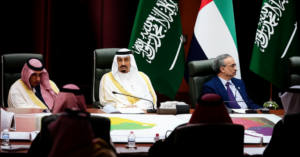




Yemen Separatist Leader’s No-Show: A Proxy Chessboard of Saudi and UAE Rivalry ♟️🔥
When Abdelmalik al-Mikhlafi, the leader of Yemen’s Southern Transitional Council (STC), declared he would not attend the latest round of peace talks, the diplomatic world didn’t hold its breath. It’s almost as if the invitation to dialogue was sent with a polite asterisk, a whisper: “Attendance optional.” Yet, beneath this refusal lies a far more treacherous battlefield — one where the Kingdom of Saudi Arabia and the United Arab Emirates (UAE) are not just referees but rival players shuffling pawns in a long, bitter proxy conflict across Yemen’s fractured landscape. 🌍
The Art of Peace Talks That Aren’t
Yemen’s conflict is often portrayed as a deadly tinderbox ignited by the Houthi rebels and quashed by Saudi-led forces. But this southern tempest, where separatists like the STC fiercely reject the internationally recognized government of Abdrabbuh Mansur Hadi, reveals an intricate web of competing interests. The separatists’ outright rejection of the talks in Riyadh is, in breathtaking irony, a refusal to participate in a process explicitly designed to unify Yemen—fragmenting the very hope that peace might bloom in a war-ravaged land.
It’s as if asking al-Mikhlafi to sit down with his rivals is like inviting a moth to share space with a flame, only to expect them to agree on illumination rather than incineration. The symbolism is palpable and cruel: while Riyadh waves its olive branch, Abu Dhabi sharpens its blade. The gulf between symbolism and reality here is no mere spat, but a chasm wide enough to swallow diplomatic efforts whole.
Saudi Vision and Emirati Ambitions: A Striking Antithesis
Saudi Arabia’s efforts focus ostensibly on restoring Yemen’s unity under the Hadi government, framing itself as a guardian of the old order, the sovereign state. On the other hand, the UAE backs the STC, champions of a revived southern identity and autonomy, if not outright secession. This dichotomy is a little like watching two imperial heirs wrestle over a diminishing realm — one clinging to the faded script of unity, another rewriting the script with separatist ink.
Saudi Arabia and the UAE’s competing agendas transform Yemen into a theater where allegiances shift like desert winds — seemingly subtle, yet cruelly decisive. The once fledgling coalition looks like a house divided, each power pursuing disparate futures for Yemen, battling under the veneer of cooperation. This divide transforms peace talks into charades where no one quite trusts the script, nor the players. The stubborn absence of the STC’s top brass at these talks underscores this distrust and deepens fissures threatening to bankrupt Yemen’s fragile stability.
The Southern Transitional Council: A Rebel Heartbeat
The STC’s refusal to attend isn’t mere obstinacy. It reflects decades of frustration, alienation, and a deeply entrenched sense that the promises of unity have been nothing but mirages. Southern Yemen, once an independent state before unification in 1990, pulses with memories and grievances that feel as old and as heavy as the ancient frankincense trees lining Socotra Island.
For al-Mikhlafi and his supporters, attending peace talks that sideline their core demands risks legitimizing a status quo they reject. It’s a poignant reminder: in peace processes, the absence of key voices resounds louder than any grand statement. Their silence echoes with all the frequency of a storm warning, heralding potential escalations rather than resolutions.
What Does This Mean for Yemen and Gulf Hegemony? ⏳🕊️
Looking at this fraying tapestry, one must ask: can Yemen be stitched back together by actors whose first loyalty lies in competing regional designs rather than Yemeni unity? Or has the very idea of a unified Yemen become an anachronism—a relic like the pre-digital era’s carefully folded maps?
The ongoing Saudi-UAE rift over Yemen is reminiscent of Cold War proxy skirmishes, where local suffering was overshadowed by grander power plays. Yemen doesn’t just wear its wounds on its sleeve; it bleeds in the shadow of a geopolitical chess match far beyond its borders.
As the STC leader’s chair remains conspicuously empty in Riyadh, the international community faces a paradox. The refusal to engage is the loudest message yet: peace without consensus is a mirage. And in Yemen’s case, that mirage has flickered, blurred — and perhaps, is beginning to fade into the desert dusk.
In the vast and volatile geography of Middle Eastern politics, Yemen is less a country and more a living allegory of fractured imperiums. The Saudi-UAE clash over its future is a tale of contradictory ambitions wrapped in the literal flames of war and the metaphorical fire of fractured trust.
Perhaps peace will come not from grand summits or fragile talks where essential voices sit out, but from a gritty acknowledgment that Yemen’s future must be forged, messy and contested though it may be, by Yemenis themselves—before the last candle of hope burns out under regional rivalries’ long shadows. 🕯️🤲