




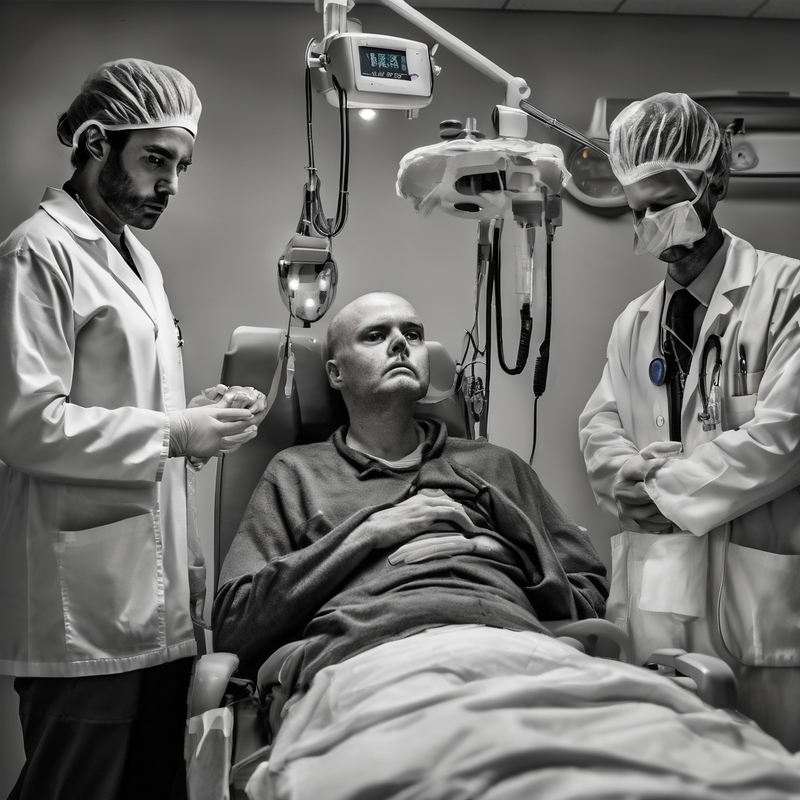
When Mental Illness Shapes Life-or-Death Transplant Decisions 🫀🧠
In a world where the scale of life and death can pivot on a single organ, the intertwining of mental illness and transplant eligibility presents a tapestry of ethical quandaries and human emotion. How do we determine who is worthy of a second chance at life? When does a moment’s philosophical query become a matter of medical practice? 🤔
Consider this: a heart is beating within a patient’s chest, yet some doctors hesitate to place another heart inside because of the mental health history that accompanies the ailing body. The irony here is stark. On one side, we value lives based on biological narratives; on the other, we control access to lifesaving treatments with judgments that evoke the profound complexity of human psychology. Without a doubt, the condition of one’s mind can influence the decision of whether that waiting list becomes a pathway to salvation or a dead end.
The Dichotomy of Health
Here lies a striking antithesis. On one hand, mental illness is often perceived as a cloud that can obscure clarity and decision-making, leading some to argue that it disqualifies individuals from critical medical interventions. On the other, the essence of humanity is found in our complexities—mental health struggles and hopes tethered together like strands of a fragile web. Should we deem someone unworthy of a transplant simply because they fight the invisible battles of depression or anxiety? In this perspective, does our pursuit of health become soulless, a sterile decision devoid of empathy? 💔
Statistics reveal disconcerting trends. Research shows that patients with a history of severe mental health conditions are less likely to receive organs despite similar medical criteria as physically healthy individuals. This unyielding bias sheds light on societal stigma and the pressing need for mental health advocacy within the corridors of healthcare.
Anecdotal Insight
Take the story of Sarah, a 38-year-old woman who spent years battling bipolar disorder while waiting for a liver transplant. Despite adhering to her treatment plan and demonstrating significant mental stability in recent years, her previous psychiatric episodes became the heavy stones in the slingshot of her hopes. Each time she approached the hospital for evaluations, those episodes, as vivid reminders of her past, were raised as red flags. How does one quantify the human spirit against the backdrop of clinical statistics? This dissonance evokes a visceral question: Are we truly judging patients based on their current state or merely being haunted by their history? 🤷♀️
The Ethical Tightrope
As clinicians deliberate with life on the line, the ethical implications unfold like a complex narrative. Should mental illness carry the same weight as physical ailments in determining transplant eligibility? There’s an argument that proposes a more holistic approach to patient evaluation, embracing the philosophical tenets of the biopsychosocial model of health that intersperses biological, psychological, and social factors in patient care.
- Transparency: Should patients be fully educated on how their mental health history might impact their eligibility?
- Holistic Assessments: How can hospitals incorporate mental health evaluations without bias while promoting fair access to transplants?
- Continued Support: What post-transplant mental health resources can improve outcomes for these patients and serve as a lifeline where others fail?
Path Forward
There’s no denying mental health is a crucial aspect of holistic care. Imagine a world where mental resilience becomes a marker for success, rather than a stumbling block. Change is needed; healthcare systems must evolve. Practices that isolate mental health as a barrier must give way to methodologies that integrate psychological support as a means to bolster patient outcomes. 🌍 We’re left with an unsettling yet invigorating realization: how to balance the scales of clinical judgment without tipping into ethical pitfalls.
The modern healthcare landscape demands a nuanced understanding, one that embraces not only the lifeless statistics but also the dynamic narratives of those who dwell within them. Each decision—life or death, organ or no organ—should reflect our inherent humanity, where frailties do not define worthiness, and every heartbeat is our collective responsibility to uphold. 💪 As we question and contend with these ethics, our voyage becomes not just a fight for survival but a testament to our resilience, always echoing that splendid opposition between life and choice, health and humanity.